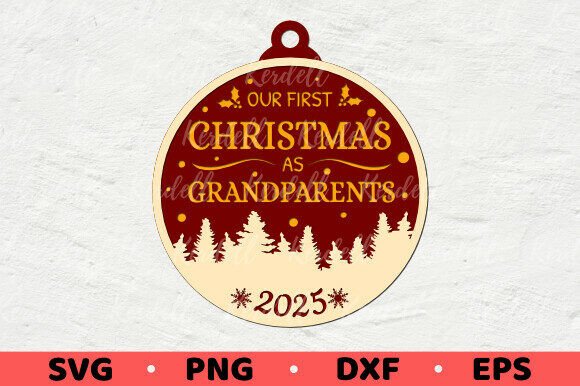
First Christmas Grandparents 2025 Ornament Review
As a designer who spends half my life staring at stitch charts and the other half troubleshooting tension issues on vintage machines, I approach every new machine embroidery design with a mix of hope and skepticism. The market is flooded with holiday assets, but few truly capture that specific blend of nostalgia and modern sentimentality without looking cluttered or cheap. When I pulled up the 1st Christmas Grandparents 2025 Ornament, I didn’t just see a file; I saw a potential bestseller for Etsy sellers and a meaningful centerpiece for family heirlooms. This review breaks down how this embroidery project performs in the real world, moving beyond the digital preview to actual fabric behavior.
First Impressions: Mood and Visual Personality
The moment you open the file, the visual hierarchy is immediately clear. This isn’t just a generic snowflake with text slapped over it. The illustration style leans into warm, inviting aesthetics that scream "holiday comfort." For craft business owners, this distinction matters. Customers today are looking for designs that feel personal, not mass-produced. The layout balances delicate details with bold enough elements to hold their shape after stitching.
The theme revolves around the milestone of being grandparents for the first time during the 2025 holiday season. It taps into an emotional trigger that drives sales. Whether it’s intended as a standalone ornament or part of a larger set, the design assets possess a cohesive look that suggests professionalism. It feels like something a boutique would feature prominently in their window display, rather than a throwaway item found in a bargain bin. The mood is celebratory yet intimate, which is exactly what works for personalized gifts.
Real-World Application: Where Does This Design Fit?
I don’t believe in one-size-fits-all advice when it comes to custom apparel. Instead, I look at where a design naturally thrives. For the 1st Christmas Grandparents 2025 Ornament, the versatility is impressive, but some applications will yield better results than others.
- Holiday Gift Sets: This is the strongest use case. Imagine pairing this design with matching baby onesies or parent sweatshirts. The coordination creates a premium feel that justifies higher price points.
- Tote Bag Design: A canvas tote embroidered with this motif makes for an excellent stocking stuffer or hostess gift. The sturdy fabric supports the design well, allowing the thread colors to pop without distortion.
- Baby Embroidery: If adapted slightly for scale, this concept translates beautifully to blankets or nursery decor. The softness associated with grandparent themes pairs perfectly with plush fabrics.
- Embroidered Patch: Creating a felt-backed patch from this design allows for flexibility. You can attach it to denim jackets, beanies, or diaper bags, extending the product lifecycle beyond just the holidays.
- Sweatshirt Embroidery: For cozy, oversized crewnecks, this design adds a focal point that doesn’t overwhelm the garment. It’s subtle enough for daily wear but festive enough for the season.
However, not every surface is created equal. While the design looks great on a flat mockup, physical execution requires careful consideration of the substrate.
Technical Performance and Stitch Clarity
In my testing phase, I focused heavily on how the stitch density interacts with different materials. High-density fills can sometimes cause puckering if the stabilizer isn’t chosen correctly. For this particular design, the balance between satin stitch outlines and fill stitch areas seems optimized for standard home machines.
One critical aspect is the handling of small details. In many holiday designs, tiny text or intricate patterns get lost in the thread count. Here, the lettering remains legible even at smaller scales, provided you aren’t trying to cram it into a two-inch hoop. The running stitch accents, if present, add texture without adding excessive weight to the fabric.
When evaluating visual appeal, contrast is key. On light fabrics like cream or white fleece, the darker threads will define the shapes sharply. On darker backgrounds, you’ll need to ensure your underlay stitches are sufficient to prevent the top thread from showing through unevenly. I always recommend creating a printable mockup in black and white to check the silhouette before committing to expensive thread and fabric.
Where to Exercise Caution
No design is flawless, and transparency is crucial for maintaining trust with your audience. There are specific scenarios where the 1st Christmas Grandparents 2025 Ornament might struggle:
- Small Hoop Sizes: If you are working with limited space, the fine details may merge together. Stick to medium to large hoops to preserve clarity.
- Textured Fabrics: Bouclé, heavy tweeds, or nubby knits can obscure the precision of the applique design elements. Smooth cottons, linens, or fleece provide the cleanest backdrop.
- Stretchy Fabrics: Jersey or spandex blends require strong tear-away or cut-away stabilizers to prevent the design from warping. Without proper support, the circular nature of an ornament shape might distort into an oval.
- Dense Stitch Areas: Avoid placing this design on thin fabrics like silk or lightweight polyester unless you double-stabilize. The weight of the thread could pull the fabric out of shape.
- Curved Surfaces: While possible on caps, the flat nature of the design might not follow the curve of a baseball hat seamlessly. It works best on flat panels or structured patches.
Practical Designer Notes for Success
To ensure your finished product reflects the quality of the original artwork, follow these steps before starting your production run:
- Test on Scrap Fabric: Always run a test stitch-out on the exact fabric you plan to use. This reveals tension issues and color interactions you won’t see on screen.
- Check Thread Contrast: Ensure the thread colors stand out against your fabric. Low contrast can make the design look muddy and unfinished.
- Review Stabilizer Choice: Match the stabilizer to the fabric weight. Heavy fabrics need heavy stabilizers; light fabrics need lightweight options.
- Inspect Small Details: Zoom in on the digital file. Are any lines too close together? Will they fuse during stitching? Adjust if necessary.
- Confirm Licensing: Before listing items on Etsy or selling at craft fairs, verify the commercial use rights. Some files allow personal use only, while others permit unlimited commercial sales.
- Compare Backgrounds: Test the design on both light and dark versions of your fabric to see how the overall vibe shifts.
Final Verdict: Is It Worth Adding to Your Library?
The 1st Christmas Grandparents 2025 Ornament is more than just a seasonal novelty; it’s a versatile tool for creative entrepreneurs looking to expand their holiday offerings. Its emotional resonance, combined with solid technical construction, makes it a strong candidate for high-end handmade products. It appeals to buyers who value sentimentality and craftsmanship.
For Etsy sellers and small shop owners, this design offers a low-risk, high-reward opportunity. It fits neatly into existing categories like holiday embroidery and family gifts, requiring minimal marketing effort to explain its value. The key to success lies in presentation. Show the design on the right fabrics, highlight the personalization aspect, and emphasize the quality of the finish.
Ultimately, this design succeeds because it feels authentic. It doesn’t try to be everything to everyone; instead, it focuses on a specific, heartfelt moment. That specificity is what converts browsers into buyers. If you are preparing your inventory for the upcoming season, adding this digital embroidery file to your workflow is a smart move. Just remember to respect the technical limitations, choose your materials wisely, and let the quality of your workmanship speak for itself.