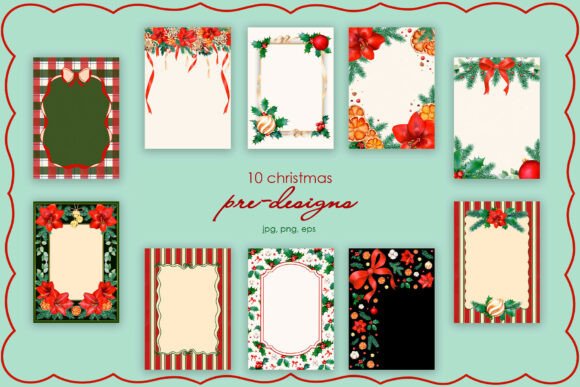
Christmas Botanicals Pre-Made Templates Review
As a designer who spends half my life staring at digitized files and the other half wrestling with thread tension, I don’t just look for pretty pictures. I look for functionality. When Christmas Botanicals Pre-Made Templates landed on my desk, my first instinct wasn’t to imagine it on a holiday card, but to visualize it stitched onto a textured cotton canvas tote bag destined for a busy Etsy customer. The difference between a design that looks good on screen and one that stitches well in reality is where careers are made or broken. After running through a mental simulation of production, from hoop placement to final finishing, here is my honest take on how this illustrations category asset holds up in the real world of handmade commerce.
First Impressions: Mood and Visual Personality
The immediate appeal of these templates lies in their organic, botanical roots. Unlike rigid geometric patterns or overly complex narrative scenes, this collection feels grounded and timeless. It creates a mood that is festive yet sophisticated—perfect for the modern crafter who wants to move away from cliché snowmen and toward something more editorial. The layout suggests a natural flow, which is critical when you are trying to fit a design into an existing product structure, like the front pocket of an apron or the cuff of a sweatshirt.
Visually, the design personality leans toward rustic elegance. It feels right at home in boutique branding or high-end gift packaging. For the Etsy seller or small shop owner, this aesthetic offers a distinct advantage: it appeals to buyers looking for "quiet luxury" in their holiday decor. It doesn’t shout; it whispers quality. This subtlety often translates to higher perceived value in the finished product, allowing you to price your items confidently without relying on flashy, cheap-looking embellishments.
Real-World Application: Where This Design Shines
I have spent years testing designs across various substrates, and Christmas Botanicals Pre-Made Templates shows remarkable versatility. Here is how I see it performing in specific commercial scenarios:
- Custom Apparel and Sweatshirts: Placed centrally on a heavyweight fleece sweatshirt, the botanical elements provide a nice contrast against the soft texture. The design likely balances well with fill stitch areas if the file includes dense foliage, creating a rich, tactile surface that customers love to touch.
- Tote Bags and Canvas Goods: This is perhaps the strongest use case. A tote bag design featuring these botanicals would look stunning on natural linen or heavy cotton duck. The organic shapes mimic the weave of the fabric, making the embroidery feel integrated rather than pasted on. It elevates a simple utility item into a fashion accessory.
- Baby Embroidery and Nursery Decor: The gentle nature of the theme makes it ideal for baby embroidery. Think christening gowns, milestone blankets, or nursery wall art. The softness of the botanical lines avoids being too harsh or loud, which is essential for products meant for infants. It also works beautifully as part of a coordinated gift set, pairing well with neutral color palettes.
- Kitchen Textiles: For the craft business focused on home goods, tea towels and kitchen aprons are high-volume sellers. These templates offer enough detail to be interesting but aren’t so cluttered that they overwhelm a small square of fabric. They add a touch of seasonal warmth to the kitchen without feeling tacky.
In each of these scenarios, the design supports the concept of a personalized gift. Whether it’s monogrammed alongside the botanical motif or used as a standalone accent, it adds a layer of thoughtfulness that drives engagement and repeat purchases.
Technical Considerations and Potential Pitfalls
No design is perfect, and transparency is key for any serious embroidery project. While the visual appeal is high, there are specific areas where caution is required. If you are planning to use this for commercial embroidery or mass production, you must consider the following technical constraints.
One area to watch closely is the stitch density. Botanical designs can sometimes suffer if the digitizer does not balance leaf details with adequate underlay. If the density is too low, the fabric may pucker; if it is too high, the design can become stiff and lose its organic feel. Always inspect the small details before committing to a large run. Additionally, pay attention to the satin stitch usage. If the template relies heavily on satin stitches for thin stems or delicate petals, ensure the thread colors provide enough contrast against your chosen fabric. On dark fabrics, light-colored botanicals might get lost unless you use a stabilizing underlay or a contrasting background patch.
Another challenge arises with curved surfaces like caps or hats. While a flat-front cap might handle the design well, a highly structured or curved brim could distort the symmetry of the botanical arrangement. In such cases, reducing the scale of the design or adjusting the angle of placement is crucial. Similarly, avoid using this design on stretchy knits without proper stabilization, as the tension of the fabric can pull the threads out of alignment during wear.
Practical Designer Notes for Production
To ensure your finished product meets professional standards, I recommend following these practical steps before you start stitching:
- Test on Scrap Fabric: Never trust a digital preview alone. Stitch the design on the exact fabric type you plan to sell. Check how the thread colors interact with the material’s texture.
- Check Hoop Size Constraints: Confirm that your machine’s hoop size accommodates the full extent of the design. If the botanical elements extend beyond standard hoops, you may need to reposition the design or use a larger frame.
- Review Stitch Types: Look for a mix of running stitch for fine details and fill stitch for broader areas. A good balance ensures the design has depth and durability.
- Black and White Mockups: Convert the design to grayscale to check for contrast issues. This helps identify areas where details might merge together, especially on dark backgrounds.
- Stabilizer Selection: Use the appropriate stabilizer for your fabric weight. Heavy cut-away stabilizers are often necessary for dense botanical designs to prevent shifting and puckering.
Final Verdict: Is It Worth the Investment?
For designers looking to expand their design assets with a versatile, seasonally relevant option, Christmas Botanicals Pre-Made Templates is a strong contender. It bridges the gap between artistic expression and commercial viability. It is not just an illustrations piece; it is a functional tool that can enhance your brand identity and customer satisfaction.
However, success depends on execution. The design itself is only half the battle. Your choice of fabric, thread quality, and finishing techniques will determine whether the final product feels like a mass-produced novelty or a cherished keepsake. By approaching this template with a critical eye and adhering to best practices in machine embroidery design, you can create beautiful, durable products that stand out in a crowded marketplace.
If you are an apparel decorator or digital product seller, consider how this design fits into your current seasonal lineup. Does it complement your existing offerings? Does it fill a gap in your catalog? With careful planning and attention to detail, these templates can become a staple in your workflow, helping you deliver consistent, high-quality results that keep customers coming back year after year.